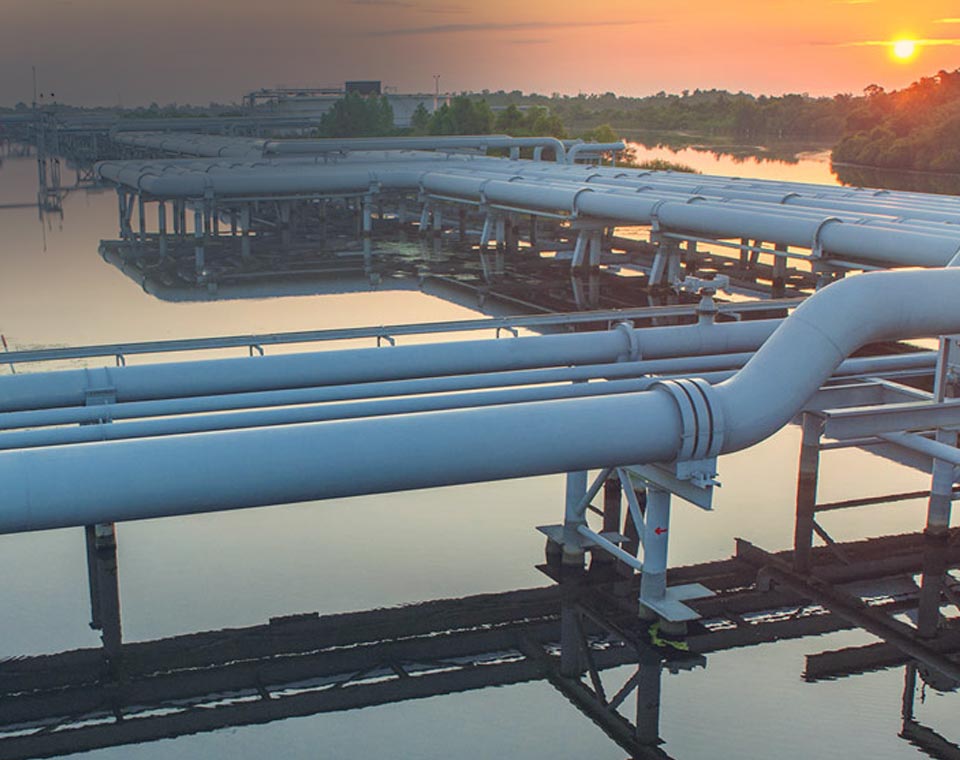
Loading and Wharf Lines

Ensuring the continued performance of your marine assets.

Using state-of-the-art InVista™ inspection technology and decades of learned expertise, Quest Integrity brings your marine activity to max efficiency by keeping your most critical assets online.

TALK TO AN EXPERT SOFTWARE SOLUTIONS

Crude Loading

Verify the integrity of previously uninspectable pipelines as they are, without expensive and needless modifications. Enhance safety and reliability using our through, ultrahigh-fidelity in-line inspection solutions.

Marine and Product Loading Terminals

Advance your integrity program and reliability expectations beyond “go no-go” pressure testing practices. Utilize state-of-the-art ILI technology to achieve full, detailed coverage of unpiggable wharf lines.

Offshore Loading Lines

Every day, crude tanker ships load and offload approximately 60 million barrels of crude oil. These critical large diameter pipelines keep the petroleum world flowing. With “as is” navigational capacity, InVista™ Marine’s high-resolution, bi-directional capabilities provide crucial integrity data sets to support reliability and serviceability goals.

Inspection Services

Quest Integrity invests heavily in its NDT technologies to capture higher quality, repeatable data with industry-leading flaw detection coverage and capabilities. Our corresponding investment in engineering assessment technology has enabled us to take full advantage of the comprehensive data gathered by these inspection tools. The resulting advantage for our clients is clear, actionable information to confidently guide your operating and asset management decisions.

InVista® Marine (Loading and Wharf) FAQ

Q: What inspection challenges are unique to marine loading and wharf pipelines?

A: Marine loading and wharf pipelines face a combination of harsh environmental and operational challenges that make traditional inspection difficult. These lines often include long shallow-water sections with limited access, frequent elevation changes, and tight-radius bends designed to accommodate tidal movement and vessel loading operations. Many are partially buried, suspended, or supported across structures, creating complex profiles that can trap debris or restrict tool passage.

In addition, variable operating pressures, intermittent service, and exposure to corrosive marine conditions accelerate degradation. InVista® Subsea addresses these challenges with a compact, tethered design that navigates complex geometry and provides high-resolution integrity data without requiring major modifications or extended outages.


Q: How does InVista Marine address corrosion and integrity risks in marine environments?

A: InVista® Marine is engineered specifically for the demanding conditions found in jetties, wharfs, and marine loading lines where corrosion risks are elevated. The system provides high-resolution inspection data that identifies wall loss, pitting, and localized damage often accelerated by saltwater exposure, variable flow, and intermittent service.

Its compact, tethered configuration navigates complex pipeline layouts common in marine facilities, including suspended spans, structural crossings, and sweeping bends, without requiring major modifications. By delivering accurate, actionable integrity insights, InVista® Marine helps operators manage corrosion proactively, verify fitness-for-service, and plan maintenance or replacement with confidence.


Q: What are the access and deployment requirements for InVista Marine inspections?

A: InVista® Marine is designed for quick, low-impact access to marine loading and wharf pipelines. The tool can be deployed through existing flanges, spool pieces, or temporary access points, avoiding major modifications or shutdown-intensive preparations.

Its lightweight, tethered configuration allows safe handling from jetties, berths, or near-shore platforms, even where space and lifting capacity are limited. Flexible deployment options, including topsides, quayside, or small-vessel support, allow operators to adapt to tidal conditions, restricted work windows, and congested marine facilities.

The result is a streamlined inspection process that fits efficiently into routine maintenance or planned outage schedules.


Q: How does Quest Integrity ensure minimal disruption to port operations during marine pipeline inspections?

A: Quest Integrity designs its marine inspection programs to integrate smoothly with busy port environments. InVista® Marine’s compact, tethered system can be deployed from small work areas, such as jetties, berths, or quayside locations, avoiding the need to shut down key loading infrastructure or interrupt vessel movements.

Project teams plan around tidal cycles, berth schedules, and cargo operations to ensure safe, efficient access with minimal operational impact. Rapid mobilization, streamlined setup, and real-time tool control further reduce offshore or landside intervention.

The result is a high-quality inspection that fits within normal port activity while delivering the integrity insights operators need.


Q: Has Quest Integrity successfully inspected loading lines which connect from shore to shallow water mooring points such as SBMs/CBMs?

A: Yes. Quest Integrity has successfully inspected shore-to-mooring loading lines serving SBMs, CBMs, and other near-shore buoy systems. These pipelines typically feature challenging geometry, shallow-water sections, and limited access, conditions well suited to the compact, tethered InVista® Marine and InVista® Subsea technologies.

Project teams have delivered high-resolution integrity data while working within tight tidal windows, congested marine facilities, and active terminal operations. These projects demonstrate the system’s versatility and its ability to provide reliable, actionable results across a wide range of marine loading configurations.


Q: Beyond detecting and reporting ovality, internal and external metal loss, and deformations, what can Quest Integrity do with the captured data?

A: Quest Integrity converts high-resolution inspection data into clear, actionable intelligence. Engineering teams use the full dataset to perform detailed fitness-for-service evaluations, remaining life assessments, corrosion growth trending, and scenario-based integrity planning.

Operating history, materials data, and environmental conditions are also integrated to develop a forward-looking view of asset performance. The result is more than a list of anomalies, it is a comprehensive integrity assessment that supports smarter maintenance decisions, optimized intervention programs, and confident life-extension strategies.

Quest Integrity is now part of Baker Hughes.

READ MORE

Talk To An Expert

Do you want to discover more about Quest Integrity services and solutions for your company? Let us know about your project here.

Explore our interactive subsea site and discover how our solutions transform offshore inspections