Infrastructure Pipeline

Intelligent Pipeline Pigging Solutions

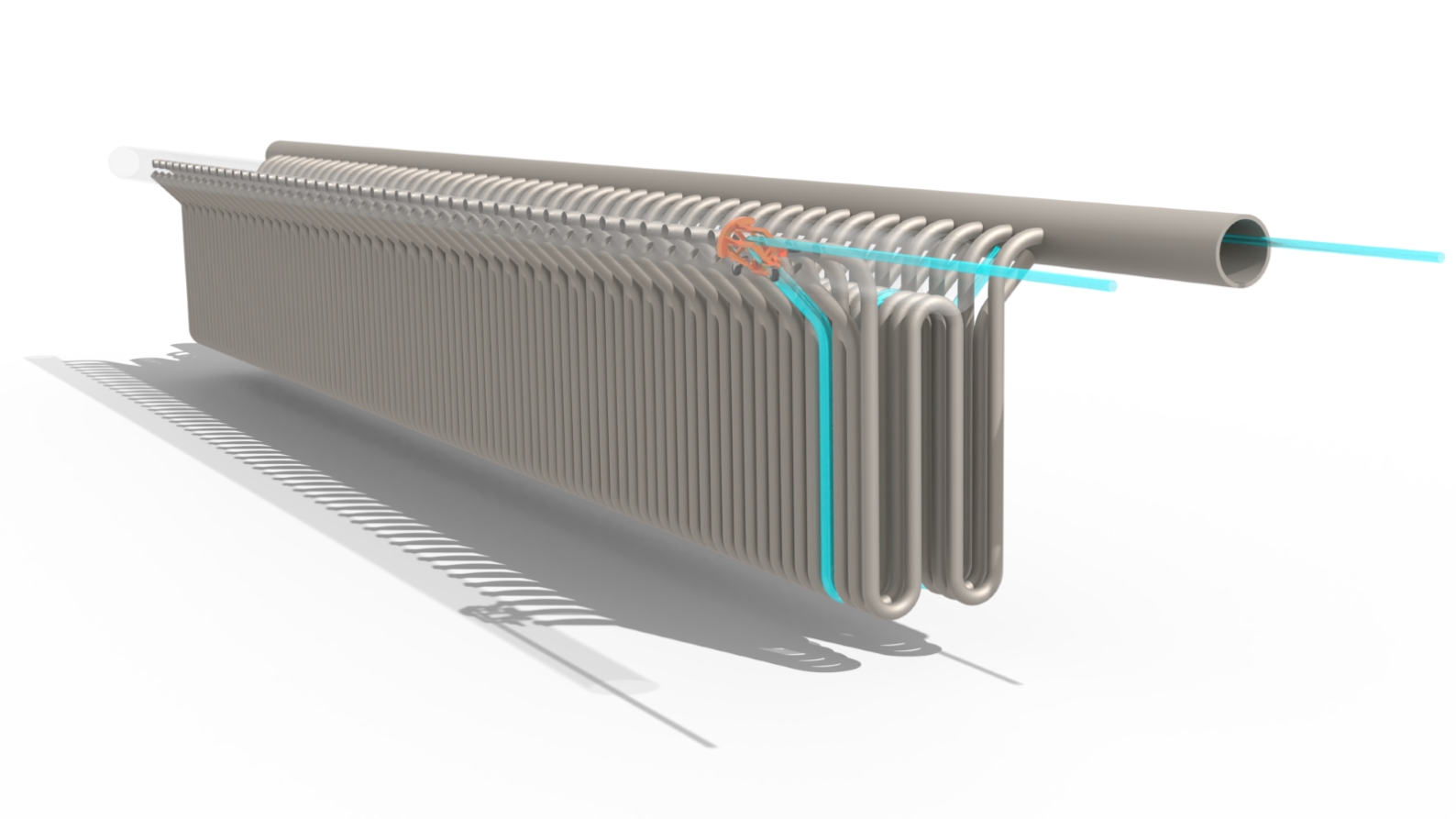
InVista® In-Line Inspection Technology — Comprehensive inspection solutions using intelligent pigging technology & advanced engineering assessment capabilities.

Talk To An Expert
QWIX

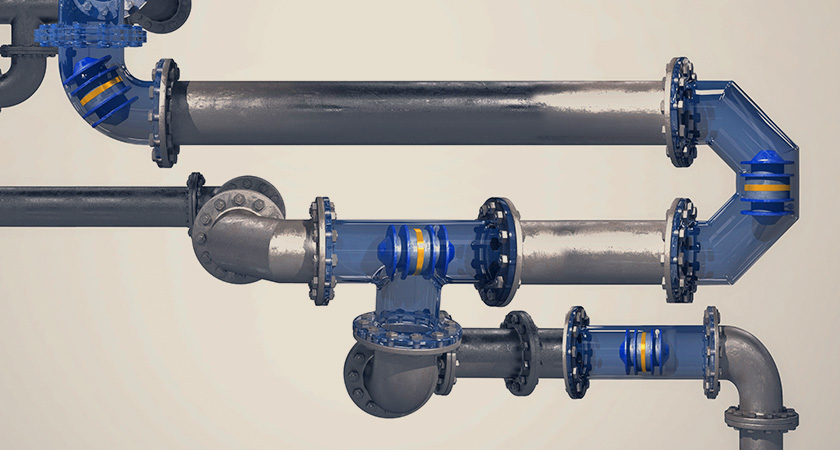
Quest Integrity provides comprehensive inspection solutions powered by intelligent pipeline pigging technology and advanced engineering assessment capabilities. The InVista® bi-directional in-line inspection (ILI) tool can provide integrity assessments of piping systems fabricated from austenitic, ferritic, and some non-metallic materials, in dual or multi diameters of 2- to 48-in, including varying pipe wall thicknesses.

Based on pipeline inspection results, an advanced engineering assessment can be made using Quest Integrity’s proprietary software: Streamline Universal Platform™. It enables data set(s) from a pipeline to be interlaced with existing data on that same line. Additionally, the Streamline platform can calculate the remaining life and fitness-for-service of pipelines in accordance with API 579/ASME FFS-1 standards. Accurate corrosion rate information enables operators to take a proactive approach to reducing the risk of failures, while optimizing pipeline integrity management.

Following the field inspection and preliminary report, the high-quality ILI data is analyzed for wall loss and anomalies such as corrosion, denting and ovality. Our Streamline software assesses the pipeline’s fitness-for-service and quantifies the extent of metal loss damage. The remaining strength factor (RSF) and reduced maximum allowable operating pressure (MAOPr) are also determined for the complete data set. A final report including the data analysis and assessment results is delivered for each ILI (in-line inspection) project along with the Streamline data viewer.
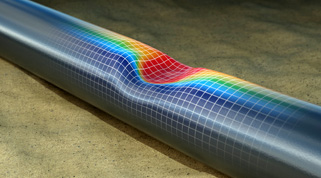
InVista® In-Line Inspection Technology — Comprehensive inspection solutions using intelligent pigging technology & advanced engineering assessment capabilities.

Talk To An Expert
QWIX

Highlights

Explore the features of InVista® In-Line Inspection (ILI) Technology

  • Inspects 100% of internal and external pipe surfaces
  • Mid-wall feature detection (laminations, inclusions)
  • Pinpoints potential degradation, ensuring timely repairs
  • Maximizes condition assessment of internal and external pipe surfaces
  • Minimizes operational and safety risks
  • Provides 100% overlapping coverage of straight pipes
  • Inspects 2- to 48-in (51-1219mm) diameter piping of a few feet, up to several miles
  • Navigates:
    • Fittings (e.g., tees, wyes, bends)
    • Short-radius inside diameter (ID) bends (e.g., 45°, 90°, 180°)
    • Valves (e.g., ball, gate, check) and other unobstructed center-bore pipe including a major brands of pigging valves
    • Branched connections
  • Delivers results compatible with API 570 and API 574 piping management standards
  • Delivers cost-effective results compared to alternatives (e.g., localized excavations)
  • Flexible and efficient implementation
  • Operates bi-directionally, providing single-pass, combined geometry, and metal-loss data with 100% overlapping coverage
  • Identifies and quantifies pitting and other acute corrosion while providing detailed imagery
  • Provides ILI-inspection resolution and coverage unaffected by pipe supports or metal-to-metal contact
  • Accuracy unaffected in cased piping sections rivers, roads and railways
  • Reduces wear impact and debris collection with other ILI technologies
  • Produces less signal distortion while providing powerful 2D and 3D user interfaces
  • Allows same location launch/retrieval
  • Light, compact, configurable, memory-based tool

Buried or inaccessible piping in Nuclear and Fossil facility, including:

  • Refined petroleum products
  • Crude oils and unrefined petroleum products
  • HDPE coal and slurry piping systems
  • Petrochemical piping
  • Marine transfer piping
  • Fire protection
  • Potable water systems
  • Airport fueling systems
  • Floor and equipment drains
  • Insulated piping where corrosion under insulation may be an issue
  • Wastewater piping
  • Short piping systems in and around a tank farm
  • Auxiliary/emergency piping

Piping constructed of various materials:

  • Carbon steel
  • Stainless steel
  • Aluminum
  • Copper
  • Mixed alloys
  • HDPE

InVista™ ILI technology detects and quantifies:

  • Corrosion under insulation (CUI)
  • Sulfidation corrosion
  • Metal dusting
  • Fuel ash corrosion
  • Oxidation
  • Organic acid corrosion
  • Erosion/erosion-corrosion
  • Galvanic corrosion
  • Caustic corrosion
  • Atmospheric corrosion
  • Soil to interface corrosion
  • Soil corrosion
  • Cooling water corrosion
  • Flue-gas dew-point corrosion
  • Hydrogen blistering
  • Creep and stress rupture
  • Bulging
  • Swelling
  • Ovality
  • Q: What types of pipelines are considered “unpiggable” or difficult to inspect, and how does Quest Integrity address these challenges?

A: Pipelines are considered “unpiggable” when their design or operating conditions prevent the use of conventional inline inspection (ILI) tools. Common challenges include complex geometries and physical constraints, such as non-barred tee connections (including hot taps), wyes or modified systems, significant internal diameter changes, tight-radius bends, partially closed valves, and the absence of launch or receive facilities. Low-flow or low-pressure conditions, as well as small-diameter or specialty lines like subsea spools and loading lines, can also limit inspection options.

Quest Integrity addresses these challenges with advanced inspection technologies and specialized access solutions designed for difficult environments. Our tools are engineered to navigate complex pipeline geometries, operate effectively in low-flow conditions, and inspect assets that cannot accommodate traditional ILI systems. For offshore applications, the InVista® Subsea Launch/Receive system enables inspection without the need for topside pigging facilities, making it possible to assess deepwater and remote pipelines that were previously inaccessible.

The result is reliable, high-quality inspection data that empowers operators to make informed integrity decisions across even the most challenging pipeline assets.

  • Q: Why is pipeline inspection necessary?

A: Pipeline inspection is essential for ensuring the safe, reliable, and efficient operation of energy and process infrastructure. Over time, pipelines can develop corrosion, deformation, cracking, and other integrity threats that are not visible externally. Regular inspections allow operators to detect these issues early, helping to prevent unplanned shutdowns and reduce the risk of leaks or failures.

By delivering accurate, actionable condition data, inspection supports regulatory compliance, extends asset life, and enables more informed maintenance and investment decisions. The result is improved safety, reduced operational risk, and optimized performance across the entire pipeline system.

  • Q: How does Quest Integrity’s ILI technology compare with competitors?

A: Quest Integrity’s ILI technology is designed for environments where conventional tools struggle. While many providers focus on standard, easy-to-pig pipelines, Quest specializes in difficult-to-inspect and previously unpiggable systems, delivering solutions that extend beyond traditional ILI capabilities.

Our tools are engineered to navigate tight bends, diameter changes, complex routing, and low-flow conditions, while providing high-resolution data without requiring major pipeline modifications. For offshore assets, the InVista® Subsea Launch/Receive system enables inspection even when no topside pigging facilities exist, an obstacle that typically limits standard inspection approaches.

The result is a high-fidelity, engineering-grade dataset in environments where competitors often cannot operate, giving operators clearer insights, broader inspection coverage, and greater confidence in their integrity decisions.

  • Q: What are the unique features of Quest Integrity’s ILI solutions for pipelines with complex geometry, varying diameters, or limited access points?

A: Quest Integrity’s ILI solutions are purpose-built for pipelines that challenge conventional inspection tools. Our technology combines flexibility, compact design, and advanced sensor performance to navigate tight bends, back-to-back elbows, diameter changes, and multi-planar routing without sacrificing data quality.

For pipelines with limited or no access points, Quest offers specialized deployment methods, including temporary launch and receive options and the InVista® Subsea Launch/Receive system. These solutions enable inspection where traditional pig traps are unavailable, opening segments that would otherwise remain uninspected.

By combining innovative tool design with high-resolution measurement systems, Quest delivers reliable, engineering-grade data across even the most complex pipeline configurations.

  • Q: How does Quest Integrity ensure data accuracy and reliability in its in-line inspection reports?

A: Quest Integrity ensures data accuracy through a combination of advanced sensor technology, rigorous calibration, and proven engineering methodologies. Our ILI tools capture high-resolution measurements that are validated through controlled calibration processes and quality-assured data review workflows.

Each dataset undergoes multiple layers of verification, including automated signal checks, analyst interpretation, and engineering validation to ensure consistency and accuracy. This disciplined approach produces reliable, defensible inspection reports that support informed integrity decisions.

  • Q: What is the process for planning and executing an ILI project with Quest Integrity?

A: Quest Integrity follows a streamlined, end-to-end process designed to deliver safe, efficient, and reliable inspection results. Each project begins with a feasibility review to evaluate pipeline configuration, operating conditions, and access constraints, ensuring the optimal inspection approach is selected.

A project-specific execution plan is then developed, covering tool selection, deployment methods, data quality expectations, and operational requirements. During execution, field teams manage tool preparation, launch, tracking, and retrieval to ensure safe and controlled operations.
After the inspection run, collected data undergoes rigorous analysis and validation, resulting in a clear, engineering-grade report with actionable insights. The process is collaborative, transparent, and tailored to each asset.

  • Q: How does Quest Integrity support clients in regulatory compliance and post-inspection remediation?

A: Quest Integrity helps operators translate inspection results into compliant, defensible actions. Reporting and processes are aligned with applicable regulations and standards, with traceable anomaly records and documentation suitable for audits, compliance filings, and risk reviews.

Post-inspection findings are converted into actionable remediation plans, including anomaly prioritization, repair criteria, and support for Fitness-for-Service assessments. Additional support includes excavation and verification planning, re-assessment intervals, corrosion growth analysis, and repair validation.

This approach provides a clear path from data to decisions to documented compliance, helping minimize risk and downtime while maintaining asset integrity.

  • Q: How does Quest assist with repair planning?

A: Quest Integrity supports repair planning by converting inspection results into clear, prioritized, and actionable guidance. ILI data is used to identify and categorize anomalies, assess severity, and determine which require immediate attention versus ongoing monitoring.

Our engineering team provides Fitness-for-Service evaluations, corrosion growth assessments, and repair recommendations aligned with applicable standards and operator requirements. We also support logistical planning, including excavation locations, verification digs, repair methods, and re-assessment intervals.

The result is a focused, defensible repair plan that enables safe, efficient execution while minimizing downtime and preserving asset integrity.

  • Q: What is Quest Integrity’s InVista® In-Line Inspection Technology and what makes it suitable for challenging or non-traditional pipeline applications?

A: InVista® is Quest Integrity’s advanced in-line inspection technology, designed specifically for pipelines that traditional ILI tools struggle to inspect. Its compact, highly flexible design allows it to navigate tight bends, diameter changes, back-to-back elbows, and complex routing commonly found in onshore gathering systems, terminals, refineries, and facility piping.

Unlike conventional tools that require steady flow and ideal geometry, InVista® operates effectively in low-flow or intermittent-flow conditions and in pipelines with limited access, non-standard configurations, or space constraints. This makes it well suited for operators who need high-quality inspection data from lines that cannot accommodate standard cleaning pigs or large ILI tools.

By combining robust mechanical design with high-resolution measurement capabilities, InVista® delivers clear, actionable integrity data, helping operators assess corrosion, deformation, and other defects across assets that would otherwise go uninspected.

  • Q: How does InVista® Pipeline’s inspection technology differ from conventional pigging tools?

A: InVista® differs from conventional pigging tools by delivering high-quality inspection data in pipelines that traditional ILI systems often cannot navigate. Its compact, highly flexible design allows it to pass through tight bends, diameter transitions, and non-standard routing typical of onshore gathering systems, facilities, and terminals.

Unlike conventional pigs that rely on steady flow and ideal pipeline geometry, InVista® operates in low-flow, variable-flow, or intermittent-flow environments and requires minimal launch and receive infrastructure. Its advanced measurement sensors provide high-resolution defect detection even in challenging conditions, giving operators a clear view of pipeline integrity without major modifications or downtime.

The result is a versatile, reliable inspection solution that expands access to assets previously considered difficult or impossible to assess with traditional tools.

  • Q: What are the benefits of using InVista® Pipeline for pipelines with varying wall thickness or flow conditions?

A: InVista® Pipeline is built to handle the real-world complexity of onshore systems, where wall thickness changes, mixed materials, and variable flow conditions are common. Its compact, tethered design provides controlled inspection even in low-flow or no-flow environments where free-swimming tools struggle.

The system maintains stable positioning and consistent data quality across transitions in diameter or wall thickness, delivering high-resolution measurements regardless of operating conditions. This allows operators to inspect challenging segments such as laterals, terminals, river crossings, station piping, and short isolated sections with confidence.

The result is reliable integrity data without relying on ideal flow rates or extensive system modifications.

  • Q: Can InVista® Pipeline be deployed in both liquid and gas pipelines?

A: Yes. InVista® Pipeline is designed for flexible deployment in both liquid and gas pipelines, including systems with limited or inconsistent flow. Because it operates as a tethered, self-propelled tool, it does not rely on product pressure or flow velocity to move through the line.

This makes it well suited for challenging environments such as low-flow gas laterals, isolated station piping, terminal lines, and liquid systems with variable operating conditions. The result is reliable, high-resolution inspection data across a wide range of pipeline types without requiring major operational changes.

  • Q: How does InVista® Pipeline’s data resolution compare to competitors’ solutions?

A: InVista® Pipeline delivers significantly higher data resolution than many traditional ILI tools, providing a level of clarity that supports precise defect identification and accurate sizing. Its tethered design allows the tool to collect dense, high-quality measurements at controlled speeds, rather than relying on variable flow conditions.

This results in sharper definition of metal loss, deformation, and geometry features, especially in short, complex, or low-flow sections where free-swimming tools often struggle. Operators gain a more complete picture of pipeline condition, enabling confident fitness-for-service decisions and more targeted maintenance planning.

  • Q: What types of defects can InVista® Pipeline detect and size?

A: InVista® Pipeline provides high-resolution detection and sizing across a wide range of defect types commonly found in onshore and terminal piping systems. This includes internal and external metal loss, pitting, wall thinning, corrosion grooving, and general corrosion.

The system also identifies mechanical damage such as dents, buckles, and ovality, as well as geometry changes at fittings, connections, and wall-thickness transitions. With dense measurement coverage and controlled inspection speed, InVista® Pipeline delivers the clarity needed to accurately size anomalies, even in short, complex, or low-flow lines where traditional ILI tools struggle.


  • Inspects 100% of internal and external pipe surfaces
  • Mid-wall feature detection (laminations, inclusions)
  • Pinpoints potential degradation, ensuring timely repairs
  • Maximizes condition assessment of internal and external pipe surfaces
  • Minimizes operational and safety risks
  • Provides 100% overlapping coverage of straight pipes
  • Inspects 2- to 48-in (51-1219mm) diameter piping of a few feet, up to several miles
  • Navigates:
    • Fittings (e.g., tees, wyes, bends)
    • Short-radius inside diameter (ID) bends (e.g., 45°, 90°, 180°)
    • Valves (e.g., ball, gate, check) and other unobstructed center-bore pipe including a major brands of pigging valves
    • Branched connections
  • Delivers results compatible with API 570 and API 574 piping management standards
  • Delivers cost-effective results compared to alternatives (e.g., localized excavations)
  • Flexible and efficient implementation
  • Operates bi-directionally, providing single-pass, combined geometry, and metal-loss data with 100% overlapping coverage
  • Identifies and quantifies pitting and other acute corrosion while providing detailed imagery
  • Provides ILI-inspection resolution and coverage unaffected by pipe supports or metal-to-metal contact
  • Accuracy unaffected in cased piping sections rivers, roads and railways
  • Reduces wear impact and debris collection with other ILI technologies
  • Produces less signal distortion while providing powerful 2D and 3D user interfaces
  • Allows same location launch/retrieval
  • Light, compact, configurable, memory-based tool

Buried or inaccessible piping in Nuclear and Fossil facility, including:

  • Refined petroleum products
  • Crude oils and unrefined petroleum products
  • HDPE coal and slurry piping systems
  • Petrochemical piping
  • Marine transfer piping
  • Fire protection
  • Potable water systems
  • Airport fueling systems
  • Floor and equipment drains
  • Insulated piping where corrosion under insulation may be an issue
  • Wastewater piping
  • Short piping systems in and around a tank farm
  • Auxiliary/emergency piping

Piping constructed of various materials:

  • Carbon steel
  • Stainless steel
  • Aluminum
  • Copper
  • Mixed alloys
  • HDPE

InVista™ ILI technology detects and quantifies:

  • Corrosion under insulation (CUI)
  • Sulfidation corrosion
  • Metal dusting
  • Fuel ash corrosion
  • Oxidation
  • Organic acid corrosion
  • Erosion/erosion-corrosion
  • Galvanic corrosion
  • Caustic corrosion
  • Atmospheric corrosion
  • Soil to interface corrosion
  • Soil corrosion
  • Cooling water corrosion
  • Flue-gas dew-point corrosion
  • Hydrogen blistering
  • Creep and stress rupture
  • Bulging
  • Swelling
  • Ovality
  • Q: What types of pipelines are considered “unpiggable” or difficult to inspect, and how does Quest Integrity address these challenges?

A: Pipelines are considered “unpiggable” when their design or operating conditions prevent the use of conventional inline inspection (ILI) tools. Common challenges include complex geometries and physical constraints, such as non-barred tee connections (including hot taps), wyes or modified systems, significant internal diameter changes, tight-radius bends, partially closed valves, and the absence of launch or receive facilities. Low-flow or low-pressure conditions, as well as small-diameter or specialty lines like subsea spools and loading lines, can also limit inspection options.

Quest Integrity addresses these challenges with advanced inspection technologies and specialized access solutions designed for difficult environments. Our tools are engineered to navigate complex pipeline geometries, operate effectively in low-flow conditions, and inspect assets that cannot accommodate traditional ILI systems. For offshore applications, the InVista® Subsea Launch/Receive system enables inspection without the need for topside pigging facilities, making it possible to assess deepwater and remote pipelines that were previously inaccessible.

The result is reliable, high-quality inspection data that empowers operators to make informed integrity decisions across even the most challenging pipeline assets.

  • Q: Why is pipeline inspection necessary?

A: Pipeline inspection is essential for ensuring the safe, reliable, and efficient operation of energy and process infrastructure. Over time, pipelines can develop corrosion, deformation, cracking, and other integrity threats that are not visible externally. Regular inspections allow operators to detect these issues early, helping to prevent unplanned shutdowns and reduce the risk of leaks or failures.

By delivering accurate, actionable condition data, inspection supports regulatory compliance, extends asset life, and enables more informed maintenance and investment decisions. The result is improved safety, reduced operational risk, and optimized performance across the entire pipeline system.

  • Q: How does Quest Integrity’s ILI technology compare with competitors?

A: Quest Integrity’s ILI technology is designed for environments where conventional tools struggle. While many providers focus on standard, easy-to-pig pipelines, Quest specializes in difficult-to-inspect and previously unpiggable systems, delivering solutions that extend beyond traditional ILI capabilities.

Our tools are engineered to navigate tight bends, diameter changes, complex routing, and low-flow conditions, while providing high-resolution data without requiring major pipeline modifications. For offshore assets, the InVista® Subsea Launch/Receive system enables inspection even when no topside pigging facilities exist, an obstacle that typically limits standard inspection approaches.

The result is a high-fidelity, engineering-grade dataset in environments where competitors often cannot operate, giving operators clearer insights, broader inspection coverage, and greater confidence in their integrity decisions.

  • Q: What are the unique features of Quest Integrity’s ILI solutions for pipelines with complex geometry, varying diameters, or limited access points?

A: Quest Integrity’s ILI solutions are purpose-built for pipelines that challenge conventional inspection tools. Our technology combines flexibility, compact design, and advanced sensor performance to navigate tight bends, back-to-back elbows, diameter changes, and multi-planar routing without sacrificing data quality.

For pipelines with limited or no access points, Quest offers specialized deployment methods, including temporary launch and receive options and the InVista® Subsea Launch/Receive system. These solutions enable inspection where traditional pig traps are unavailable, opening segments that would otherwise remain uninspected.

By combining innovative tool design with high-resolution measurement systems, Quest delivers reliable, engineering-grade data across even the most complex pipeline configurations.

  • Q: How does Quest Integrity ensure data accuracy and reliability in its in-line inspection reports?

A: Quest Integrity ensures data accuracy through a combination of advanced sensor technology, rigorous calibration, and proven engineering methodologies. Our ILI tools capture high-resolution measurements that are validated through controlled calibration processes and quality-assured data review workflows.

Each dataset undergoes multiple layers of verification, including automated signal checks, analyst interpretation, and engineering validation to ensure consistency and accuracy. This disciplined approach produces reliable, defensible inspection reports that support informed integrity decisions.

  • Q: What is the process for planning and executing an ILI project with Quest Integrity?

A: Quest Integrity follows a streamlined, end-to-end process designed to deliver safe, efficient, and reliable inspection results. Each project begins with a feasibility review to evaluate pipeline configuration, operating conditions, and access constraints, ensuring the optimal inspection approach is selected.

A project-specific execution plan is then developed, covering tool selection, deployment methods, data quality expectations, and operational requirements. During execution, field teams manage tool preparation, launch, tracking, and retrieval to ensure safe and controlled operations.
After the inspection run, collected data undergoes rigorous analysis and validation, resulting in a clear, engineering-grade report with actionable insights. The process is collaborative, transparent, and tailored to each asset.

  • Q: How does Quest Integrity support clients in regulatory compliance and post-inspection remediation?

A: Quest Integrity helps operators translate inspection results into compliant, defensible actions. Reporting and processes are aligned with applicable regulations and standards, with traceable anomaly records and documentation suitable for audits, compliance filings, and risk reviews.

Post-inspection findings are converted into actionable remediation plans, including anomaly prioritization, repair criteria, and support for Fitness-for-Service assessments. Additional support includes excavation and verification planning, re-assessment intervals, corrosion growth analysis, and repair validation.

This approach provides a clear path from data to decisions to documented compliance, helping minimize risk and downtime while maintaining asset integrity.

  • Q: How does Quest assist with repair planning?

A: Quest Integrity supports repair planning by converting inspection results into clear, prioritized, and actionable guidance. ILI data is used to identify and categorize anomalies, assess severity, and determine which require immediate attention versus ongoing monitoring.

Our engineering team provides Fitness-for-Service evaluations, corrosion growth assessments, and repair recommendations aligned with applicable standards and operator requirements. We also support logistical planning, including excavation locations, verification digs, repair methods, and re-assessment intervals.

The result is a focused, defensible repair plan that enables safe, efficient execution while minimizing downtime and preserving asset integrity.

  • Q: What is Quest Integrity’s InVista® In-Line Inspection Technology and what makes it suitable for challenging or non-traditional pipeline applications?

A: InVista® is Quest Integrity’s advanced in-line inspection technology, designed specifically for pipelines that traditional ILI tools struggle to inspect. Its compact, highly flexible design allows it to navigate tight bends, diameter changes, back-to-back elbows, and complex routing commonly found in onshore gathering systems, terminals, refineries, and facility piping.

Unlike conventional tools that require steady flow and ideal geometry, InVista® operates effectively in low-flow or intermittent-flow conditions and in pipelines with limited access, non-standard configurations, or space constraints. This makes it well suited for operators who need high-quality inspection data from lines that cannot accommodate standard cleaning pigs or large ILI tools.

By combining robust mechanical design with high-resolution measurement capabilities, InVista® delivers clear, actionable integrity data, helping operators assess corrosion, deformation, and other defects across assets that would otherwise go uninspected.

  • Q: How does InVista® Pipeline’s inspection technology differ from conventional pigging tools?

A: InVista® differs from conventional pigging tools by delivering high-quality inspection data in pipelines that traditional ILI systems often cannot navigate. Its compact, highly flexible design allows it to pass through tight bends, diameter transitions, and non-standard routing typical of onshore gathering systems, facilities, and terminals.

Unlike conventional pigs that rely on steady flow and ideal pipeline geometry, InVista® operates in low-flow, variable-flow, or intermittent-flow environments and requires minimal launch and receive infrastructure. Its advanced measurement sensors provide high-resolution defect detection even in challenging conditions, giving operators a clear view of pipeline integrity without major modifications or downtime.

The result is a versatile, reliable inspection solution that expands access to assets previously considered difficult or impossible to assess with traditional tools.

  • Q: What are the benefits of using InVista® Pipeline for pipelines with varying wall thickness or flow conditions?

A: InVista® Pipeline is built to handle the real-world complexity of onshore systems, where wall thickness changes, mixed materials, and variable flow conditions are common. Its compact, tethered design provides controlled inspection even in low-flow or no-flow environments where free-swimming tools struggle.

The system maintains stable positioning and consistent data quality across transitions in diameter or wall thickness, delivering high-resolution measurements regardless of operating conditions. This allows operators to inspect challenging segments such as laterals, terminals, river crossings, station piping, and short isolated sections with confidence.

The result is reliable integrity data without relying on ideal flow rates or extensive system modifications.

  • Q: Can InVista® Pipeline be deployed in both liquid and gas pipelines?

A: Yes. InVista® Pipeline is designed for flexible deployment in both liquid and gas pipelines, including systems with limited or inconsistent flow. Because it operates as a tethered, self-propelled tool, it does not rely on product pressure or flow velocity to move through the line.

This makes it well suited for challenging environments such as low-flow gas laterals, isolated station piping, terminal lines, and liquid systems with variable operating conditions. The result is reliable, high-resolution inspection data across a wide range of pipeline types without requiring major operational changes.

  • Q: How does InVista® Pipeline’s data resolution compare to competitors’ solutions?

A: InVista® Pipeline delivers significantly higher data resolution than many traditional ILI tools, providing a level of clarity that supports precise defect identification and accurate sizing. Its tethered design allows the tool to collect dense, high-quality measurements at controlled speeds, rather than relying on variable flow conditions.

This results in sharper definition of metal loss, deformation, and geometry features, especially in short, complex, or low-flow sections where free-swimming tools often struggle. Operators gain a more complete picture of pipeline condition, enabling confident fitness-for-service decisions and more targeted maintenance planning.

  • Q: What types of defects can InVista® Pipeline detect and size?

A: InVista® Pipeline provides high-resolution detection and sizing across a wide range of defect types commonly found in onshore and terminal piping systems. This includes internal and external metal loss, pitting, wall thinning, corrosion grooving, and general corrosion.

The system also identifies mechanical damage such as dents, buckles, and ovality, as well as geometry changes at fittings, connections, and wall-thickness transitions. With dense measurement coverage and controlled inspection speed, InVista® Pipeline delivers the clarity needed to accurately size anomalies, even in short, complex, or low-flow lines where traditional ILI tools struggle.


Quest Integrity is now part of Baker Hughes.

READ MORE

Talk To An Expert

Do you want to discover more about Quest Integrity services and solutions for your company? Let us know about your project here.

Explore our interactive subsea site and discover how our solutions transform offshore inspections